Moving age verification to the entrance
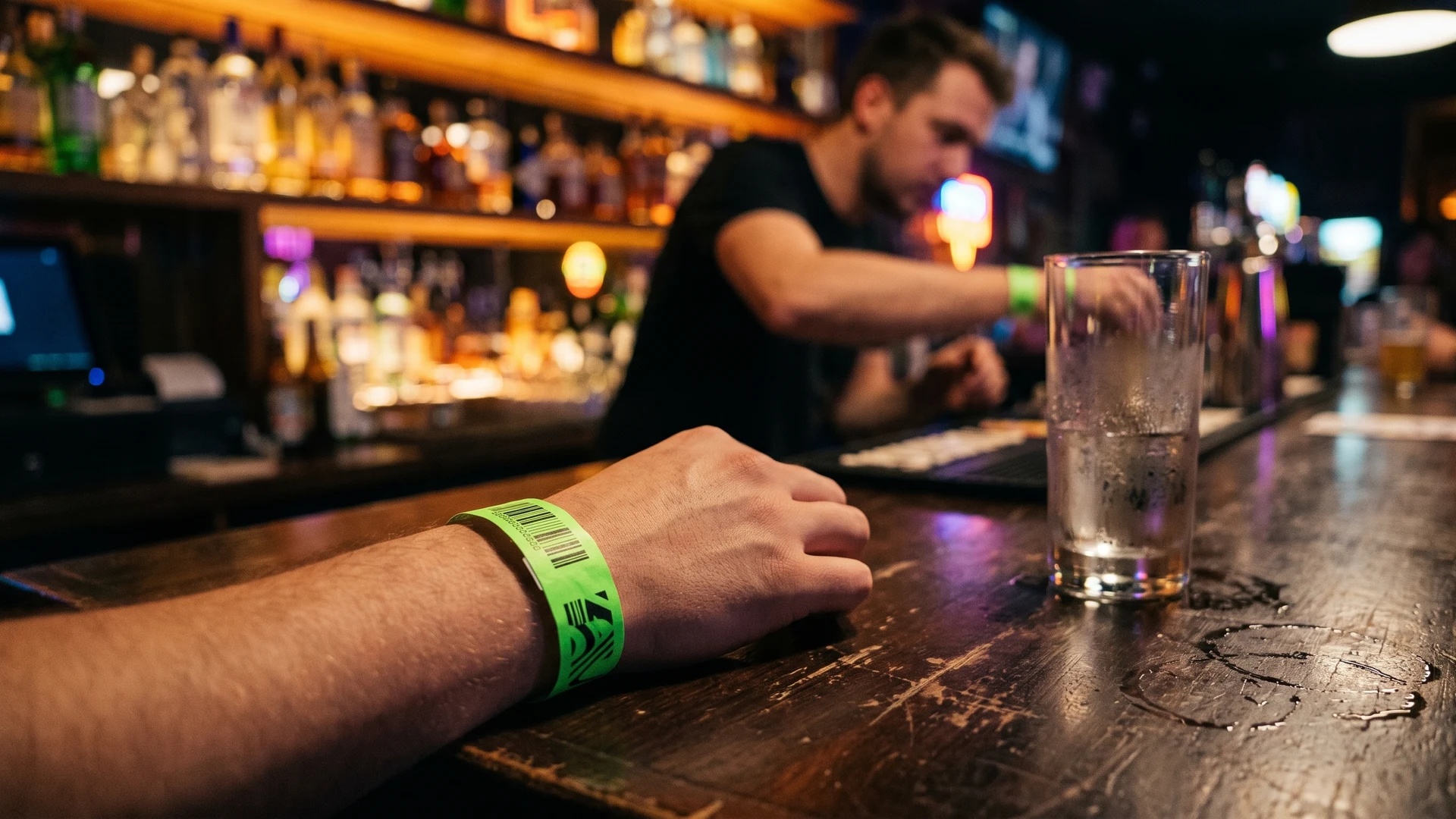
Centralising age verification at the point of entry removes a major bottleneck from your bar areas. Security staff can check identification documents in a controlled environment and apply an event wristband to clearly mark approved guests. This straightforward process means bartenders no longer need to calculate ages or scrutinise identification in poor lighting while other customers wait. A clear wristband system speeds up service, reduces access mistakes, and gives your front line staff a consistent process to follow.
Selecting the right event wristband material
You need to match the physical material of your event wristband to the duration and environment of your specific gathering. A short evening function and a weekend festival place very different demands on durability, water resistance, and comfort. Understanding these material properties helps you select an option that survives the entire event without causing discomfort to your guests.
Lightweight options for single evenings
Tyvek is a tough, paper-like material made from high-density polyethylene fibers that works perfectly for short-term events lasting one or two days. These wristbands are extremely lightweight and breathable, which makes them comfortable against the skin during a busy evening. They repel water and resist tearing, while their adhesive closure uses a die-cut slit pattern that ruins the wristband if someone attempts to remove and transfer it. This built-in tamper evidence provides a secure and cost-effective solution when you only need simple visual access control for a single night.
Durable choices for multi-day events
When your event spans several days, paper-like materials can weaken under heavy use, making vinyl or fabric better alternatives. Vinyl event wristbands repel water completely and resist oils from the skin, allowing them to stay strong for several days or even weeks. Fabric wristbands provide another durable choice that resists tearing and can last up to two weeks, though they do absorb water and take time to dry. Selecting these tougher materials ensures your access identifiers remain intact and readable throughout a long festival or multi-day conference.
Comfort considerations for family attractions
Guests at family attractions often wear their event wristbands for long hours, so skin safety and physical comfort become important factors. Lightweight materials like Tyvek allow air to pass through tiny spaces between the fibers, preventing irritation on sensitive skin during active days. If guests will be swimming or sweating heavily, vinyl offers a smooth finish that completely repels moisture without trapping it against the wrist. Choosing a comfortable material prevents guests from tampering with or removing their wristbands out of frustration before the event ends.
Combining colours and text for clear age checks
Relying solely on colour to indicate age status can lead to mistakes, especially in poorly lit venues or for staff with colour vision deficiencies. You can prevent access and service errors by designing the event wristband with a mix of clear visual identifiers. Combining a bright, high-contrast background colour with bold text or distinct symbols ensures that everyone can read the permissions instantly. This layered approach means staff never have to guess whether a guest is old enough to purchase restricted items.
A well-designed wristband communicates critical information quickly without requiring close physical inspection. You should assign specific colours to different access levels and reinforce that meaning with large printed words like ‘Over 18’ or ‘Verified’. Providing multiple ways to recognise the same permission helps your team work faster during peak service times. Clear visual communication ultimately builds confidence among your staff and keeps your queues moving smoothly.
How to issue age verification wristbands
Establishing a concrete workflow at the entrance prevents avoidable transfer or misuse of your event wristbands. Your security and access-control teams need step-by-step instructions for checking identification and applying the wristband securely. Following a consistent procedure ensures that every guest receives the correct identifier and that the closure functions exactly as intended.
- Check identification: The staff member must inspect a valid, government-issued document to verify the age of the guest before reaching for an event wristband. This step requires checking the photograph, the date of birth, and any security features on the card. Completing this check first ensures that restricted items only go to approved individuals.
- Apply the wristband securely: After verifying the age, the staff member must wrap the event wristband around the guest’s wrist and secure the closure themselves. Handing the wristband to the guest allows them to apply it loosely, which makes it easy to slip off and hand to someone else. The fit should be tight enough to prevent removal but loose enough to remain comfortable for the duration of the event.
- Test the closure: The staff member should briefly check that the adhesive or plastic snap has engaged completely. Proper application activates the tamper-evident features of the material, meaning any subsequent attempt to remove the band will destroy it. Taking a second to verify the seal guarantees that the wristband remains a reliable indicator of age status.
Helping your bar team verify guests quickly
A secure entrance process only works when your front line staff actively inspect the event wristbands at the point of service. You should train your bartenders to visually verify the colour and printed text on the wristband before they begin pouring restricted beverages. Staff must also look for torn materials, broken closures, or other signs of tampering that indicate someone may have transferred the band. This final visual check ensures your wristband system successfully helps your team serve guests safely and confidently in a busy environment.
What wristband design makes age checks quick for bar staff?
Use clear, high‑contrast event wristbands with explicit age markers so bartenders can confirm at a glance. Pair colour coding with large 21+ text or an icon, and consider printing the cutoff birth year. Add distinct patterns to support colour‑blind guests and keep designs readable in low light.
Which wristband material suits a one‑night bar compared with a multi‑day family venue?
For single‑night use, Tyvek event wristbands are low cost, water resistant, and show tamper evidence, and they typically last one to a few days. For multi‑day or wet environments, choose vinyl or fabric for comfort and durability. Silicone suits long‑term programs but is reusable, not single‑use.
How should we set up the entrance process so bartenders do not recheck ID?
Create a single checkpoint at entry where staff verify identification, apply the correct event wristband, and record quantities issued. Print clear age indicators on the wristband. Brief bar staff on the colour and text scheme, and position spot‑checkers near bars to handle exceptions.
What security features help deter wristband swapping without slowing queues?
Use tamper‑evident closures that tear if removed, plus unique serial numbering to track issues and replacements. Add barcodes or Quick Response QR codes for selective scanning where needed. Radio Frequency Identification RFID wristbands can integrate with systems, but they work best with clear procedures and trained staff.
How do we handle replacements, lost bands, or guests who refuse a wristband?
Set a replacement policy that rechecks identification, logs the old and new serial numbers, and cuts off any damaged wristband. For refusals or sensory needs, offer an agreed alternative such as a visible lanyard card or hand stamp, and brief bar staff to apply the same age rules.