Matching event wristband materials to your security requirements
You need to balance practical security needs with guest comfort when selecting your event wristbands. A single day school event usually only needs simple paper style wristbands, while a multi day festival requires durable materials with stronger security features. Assessing the duration of your event helps you determine how much wear and tear the wristbands will face from water, sweat, and physical movement. You can then look at your access control requirements to decide if you need a basic visual identifier or a more robust tamper evident closure.
Overcomplicating a simple gathering with expensive locking mechanisms wastes your budget and slows down entry lines. On the other hand, choosing a weak material for a restricted high value area leaves your event vulnerable to unauthorised access and ticket sharing. You must find the middle ground where the wristband material perfectly supports your specific gate operations. Evaluating your needs carefully ensures you implement an access system that staff can manage easily from start to finish.
Assessing Tyvek wristbands for short durations
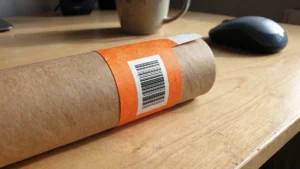
Tyvek wristbands serve as lightweight disposable options commonly used for short single day events. Tyvek is a synthetic material made from high density polyethylene fibers, which makes it tear resistant, waterproof, and comfortable against the skin. These physical properties make it ideal when your main requirement is a simple visual check for general admission or age verification at the gate. The material does not absorb water or dissolve when wet, but the adhesive tab can weaken during extended water exposure or heavy swimming.
The security of a Tyvek event wristband relies entirely on its strong adhesive closure and built in tamper evidence. The closure tab features custom die cut slits that weaken the paper like material intentionally. When you press the permanent glue down to seal the band, the bond holds tight to the skin or the overlapping band. If a guest tries to peel the band off to pass it to someone else, the slits cause the material to shred into pieces. This destructive removal prevents casual ticket sharing and gives your staff an obvious visual cue that someone has tampered with the wristband.
Using plastic and vinyl wristbands for weekend events
When your gathering spans a full weekend or involves heavy water exposure, you need materials that offer extended durability. Vinyl and plastic event wristbands bridge the gap between simple single day options and premium woven bands. These solid synthetic materials withstand continuous moisture, making them suitable for water parks, hotel resorts, and weekend festivals. You can rely on them to remain intact and readable even after three to seven days of continuous wear.
Evaluating single use snap closures
Plastic and vinyl wristbands secure to the wrist using a one way snap closure mechanism. When you press the snap together, a rigid plastic or metal peg pushes through a punched hole in the strap and locks into a hollow cap. Tiny angled teeth inside the cap bite into the peg, which prevents the user from pulling the snap apart again. This design stops casual tampering and hand removal because a guest must cut the vinyl or plastic strap with scissors to take it off.
Maintaining guest comfort during multi day wear
Guest comfort during multi day wear depends heavily on how the physical fit and material interact with the skin over time. Vinyl and plastic provide highly durable water resistance, but their non porous nature can trap heat and sweat under the band. The stiff edges of these materials can also dig into the skin if your staff apply them too tightly during admission. You must train your team to leave a comfortable amount of slack when securing the snap closure to prevent chafing and skin irritation.
Managing premium access with fabric wristbands
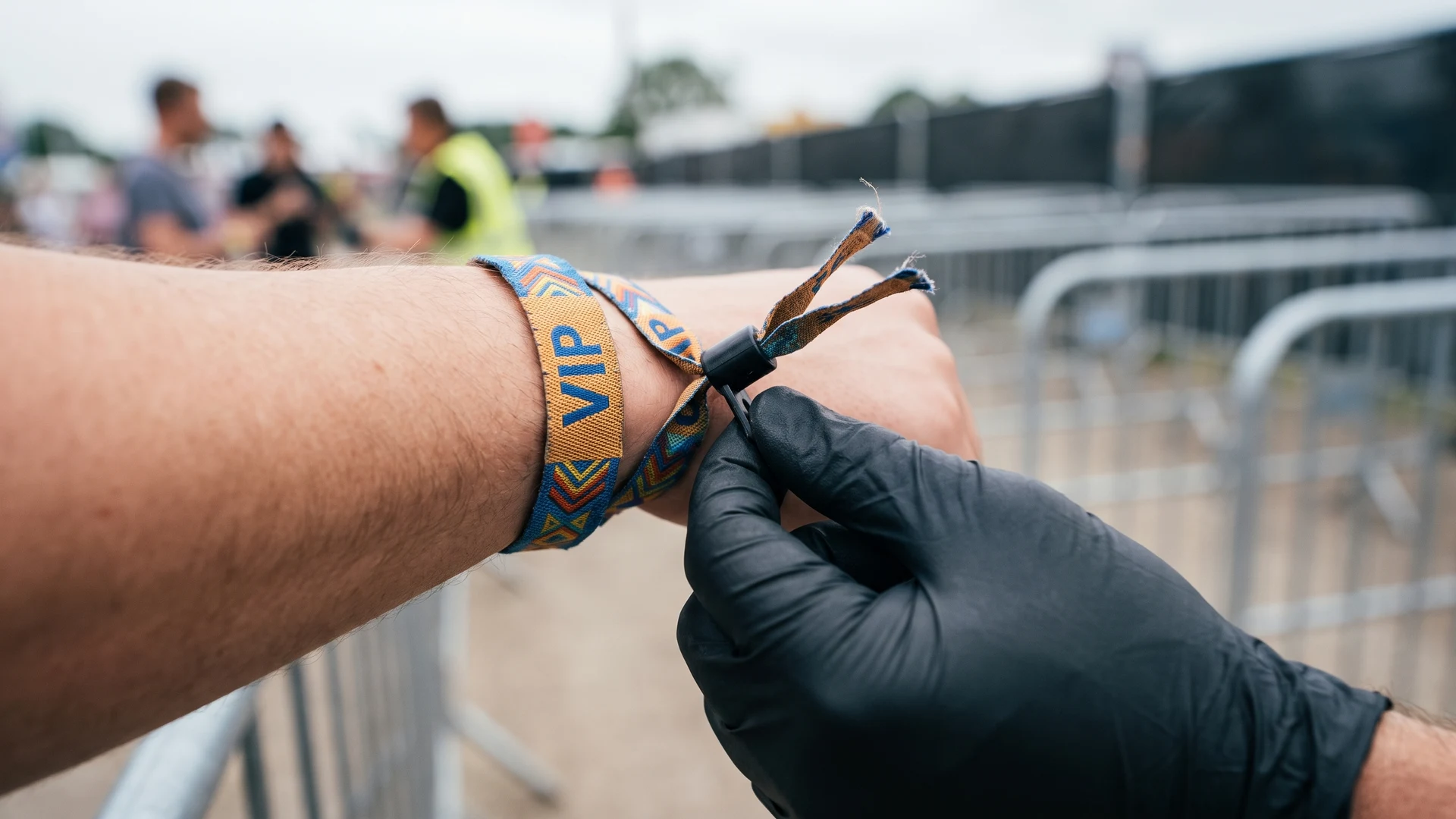
Fabric wristbands suit events where comfort, durability, and strong security matter just as much as the overall guest experience. Woven and printed fabric materials offer high breathability and natural softness, which minimises sweat accumulation during round the clock wear. They provide top tier security for premium access areas when you combine them with single use locking closures and complex anti counterfeiting weaves. This combination makes them exceptionally difficult to transfer, share, or duplicate without leaving visible signs of destruction.
Choosing the right locking mechanism
A fabric event wristband typically uses a one way sliding barrel lock or a metal crimp to secure the woven material. A plastic barrel lock features internal prongs that bite down into the fabric weave, allowing the bead to slide tighter but tearing the cloth if pulled backward. A metal crimp requires your staff to use a specialised compression tool to mechanically crush an aluminum ring tightly onto the fabric ends. Both locking closures ensure destructive removal, meaning guests must cut the band to take it off and cannot pass their credentials to someone else.
Balancing access control with keepsake value
Fabric wristbands act as high value keepsakes because they are durable, comfortable, and visually appealing long after the event ends. Attendees often wear them as badges of honor to show they participated in an exclusive festival or premium VIP experience. You can enhance this appeal by incorporating custom threading, intricate textures, and unique visual designs that also serve as security features. Supplying a beautiful and comfortable wristband encourages guests to wear their access credentials willingly while giving you a robust tool for gate management.
Understanding the limits of silicone wristbands for access control
Silicone wristbands work exceptionally well as promotional merchandise or charity awareness bands, but they present significant risks when used for gate security. These bands use a stretchable, reusable material that easily slides over the hand without causing any damage to the band itself. This flexibility creates a high transfer risk because attendees can easily slip the wristband off and hand it to an unauthorised person outside the venue. You should never use a reusable silicone band to protect restricted admission zones or high value access areas.
When event organisers mistake silicone merchandise for secure access tools, they invite predictable security failures and revenue loss. A guest could purchase one premium ticket, collect their silicone band, and repeatedly walk outside to escort unpaid friends through the gates. If you want to distribute silicone bands as event souvenirs, you must separate them entirely from your access control procedures. You should issue a secure single use event wristband at the gate and sell the silicone alternative separately at your merchandise stands.
Combining colors and printed identifiers for reliable visual checks
You can assign a different event wristband colour to each access level, which helps staff recognise permissions quickly from a distance. However, relying on colour coding as your only method for communicating critical access information creates vulnerabilities in your gate operations. Poor lighting, colour blindness, and fast moving crowds can cause front line staff to misread a solid colour during a busy rush. To build a robust visual system, you must pair your background colours with clear text, symbols, or sequential numbering.
Printing bold text or distinct symbols directly onto the wristband removes the guesswork for your security team. When a staff member checks a wristband in a dark environment, reading a large printed identifier confirms the access level instantly. You should also consider using high contrast ink colours so the printed information stands out clearly against the background material. Combining these visual elements empowers your access control teams to perform accurate checks without slowing down the flow of guests.
Training your team to inspect event wristband closures
Providing your staff with a concrete sequential process ensures every team member verifies event wristbands consistently at entry points. When staff follow a standardized inspection routine, they can easily detect tampering, unauthorised transfers, or counterfeit credentials. You should train your team to execute the following steps every time a guest approaches an access control checkpoint.
- Check the overall condition: Look at the physical material of the event wristband to ensure it remains intact. You must verify that the band is not stretched, taped, or glued back together after a previous removal. Spotting basic physical damage immediately alerts your team to a potential unauthorised transfer.
- Inspect the closure mechanism: Examine the adhesive tab, plastic snap, or locking bead to confirm it remains properly sealed. You should actively look for shredded Tyvek slits, broken plastic snap teeth, or torn fabric near the barrel lock. A damaged closure strongly indicates that someone has tried to take the wristband off and share it.
- Verify the printed identifiers: Read the text, symbols, or sequential numbers printed directly on the material instead of relying solely on the background colour. You must ensure the printed access level matches the specific zone or admission gate you are guarding. Confirming these details prevents guests from using outdated or incorrect wristbands to bypass security.
- Test the physical tension: Ask the guest to hold their wrist up so you can see how tightly the band sits against their skin. You should visually confirm that the wristband is tight enough to prevent the guest from slipping it over their hand. If the band appears excessively loose, direct the guest to a designated resolution desk for a secure replacement.
Reconciling your event wristband inventory
Reconciling your event wristband inventory serves as the essential final step in your complete access control lifecycle. After the gathering concludes, your team must count the unused stock and compare it against the numbers you initially issued at the gates. This physical count helps you track true attendance figures and identify any discrepancies involving lost or stolen stock. Gathering this reliable data allows you to audit your security processes and improve your procurement orders for the next event.
What is the best event wristband for a one-day event?
Choose a Tyvek wristband for single-day admission with simple visual checks. It is lightweight, water resistant, and uses a destructible adhesive tab with die-cut slits that show tampering. You can add sequential numbering and clear print. Avoid heavy swimming because prolonged water can weaken the adhesive.
Do we need vinyl or plastic wristbands for a weekend or water-heavy event?
Yes. Vinyl or multi-layer plastic wristbands with single-use snap closures suit multi-day wear and repeated water exposure. The snap locks and requires cutting to remove, which limits transfer. Tri-laminate constructions stay durable through sweat, showers, and swimming, and they outlast adhesive-closed paper styles.
When should we use fabric wristbands with locking beads or metal crimps?
Use woven fabric wristbands when you need multi-day comfort and high security for premium access. One-way barrel locks or metal crimps grip the weave and require cutting for removal. You can add Radio Frequency Identification chips or Near Field Communication tags, plus intricate weaves for visual checks.
Are silicone wristbands suitable for access control?
Silicone wristbands are not ideal for secure admission because they are reusable and can be stretched or slipped off, which increases transfer risk. They work better as awareness items or long-term membership markers. If used for identification, add names and a Quick Response code or barcode, and adjust procedures accordingly.
What steps help your team reduce pass backs and spot tampering at checkpoints?
Apply a snug fit that cannot slide over the hand. Place the closure where staff can see it. Fully seal adhesive tabs or confirm snap clicks. Record sequential numbers when issuing replacements. Train checks for lifted adhesive, cracked snaps, or damaged fabric locks, and combine colour with printed permissions.