
Designing a unified wristband system for multi day festivals
Operating separate access systems for ticketing and camping creates unnecessary friction at multi-day festivals. Staff members struggle to verify multiple passes quickly, and guests often lose paper tickets between the main gate and the campsite. Designing a single event wristband system removes this disjointed experience completely. A unified approach brings admission, zone access, and optional features into one wearable credential.
This integration reduces confusion for your team and lowers the risk of lost passes. You can streamline the entire entry process when security personnel only need to check one secure item. Guests appreciate the simplicity of wearing a single item that covers their entire weekend. A cohesive plan empowers event organisers with practical control over crowd management from the first arrival to the final departure.
Selecting durable materials for extended festival wear
Multi-day outdoor events require an event wristband that can survive weather changes, heavy physical movement, and sleeping in camping areas. You must choose materials that endure these conditions without breaking down or causing discomfort to the guest. It helps to separate the physical endurance of the wristband from any attached technology when making your procurement decision.
Fabric wristbands for comfort and extended use
Woven polyester fabric provides high tensile strength alongside excellent water resistance for multi-day outdoor events. This material features a tight interlocking weave that resists tearing and abrasion while maintaining vibrant colours in direct sunlight. Fabric wristbands offer exceptional breathability and moisture management compared to non-porous materials. The soft threads conform smoothly to the wrist, which prevents irritation and makes the band comfortable enough to wear while sleeping.
Plastic options for high durability and water resistance
Plastic wristbands rely on moisture-resistant polymer compositions that withstand rain, sweat, and heavy water exposure. These synthetic materials do not absorb moisture, so they remain secure and intact through swimming or continuous outdoor wear. The rigid nature of plastic prevents the band from stretching or tearing over a three-to-seven-day period. Plastic options also resist discolouration under direct ultraviolet light better than standard paper alternatives.
Choosing closures that match your security needs
The closure mechanism you select determines how securely the event wristband stays on the guest. Plastic barrel locks feature internal teeth that slide easily onto a fabric strap and grip the material to prevent loosening. Single-use vinyl snap pins are pressed together permanently on plastic bands and break if someone tries to unclip them. These one-way locking closures stop guests from removing and handing the credential to another person.
Managing multiple access credentials on one wristband
Communicating different access levels clearly ensures your security teams can manage crowds without causing delays. A unified event wristband can display general admission, VIP status, and age verification simultaneously without creating a cluttered design. You can assign a different base colour to each major ticket category to help staff recognise permissions quickly. Colour coding provides a helpful visual cue, but it should never be the sole method for communicating critical access information.
Staff operating in low light or dealing with colour blindness need additional indicators to verify permissions accurately. You should incorporate distinct text, clear symbols, and sequential numbering to define exactly what the wearer can access. Numbering gives each wristband a unique identifier within a series, helping you track issued stock and investigate discrepancies. Combining these visual elements gives staff a reliable way to confirm access rights at a glance.
Integrating technology for scanning and cashless payments
Adding digital identifiers transforms a standard physical event wristband into a tool for rapid check-ins, tracking, and payments. You must match the specific identifier technology to your festival hardware, software, and operational goals. Understanding the distinct technical requirements of each method ensures your team deploys the right system for the environment.
Visual identifiers like barcodes and QR codes
Quick Response codes function by storing a unique digital link that an optical scanner reads against a live database. You can print these unique matrix barcodes directly onto the wristband to verify ticket status or VIP access instantly. Security staff need a clear line of sight and a mobile device to capture the QR code effectively. This real-time validation prevents unauthorised transfer by linking the physical band directly to an active guest profile.
Radio Frequency Identification for access tracking
Radio Frequency Identification uses wireless radio waves to transfer data from a tiny embedded chip to a central scanner. A passive RFID tag only activates when a guest holds it near a reader at a venue gate or door. The reader captures the unique identification number and checks the central database software to validate the ticket. Operating frequencies, physical interference from liquids, and dense crowds can all influence the effective signal range of the tags.
Near Field Communication for cashless capabilities
Near Field Communication requires specific hardware and operates strictly on the 13.56 megahertz frequency band for close-proximity data exchange. This technology is distinct from RFID and is specifically tailored for secure contactless payment systems. An NFC-enabled point-of-sale terminal communicates securely with the wristband chip using end-to-end encryption. The system relies on tokenisation to replace raw account numbers with secure digital tokens, protecting guest financial data against breaches.
Organizing the guest check in and application process
A strong event wristband system relies entirely on the check-in process that supports it. You need a concrete sequence for staff to follow when verifying tickets and issuing credentials to arriving guests. Establishing these concrete steps helps volunteer coordinators minimise queues and ensures every wristband is applied securely.
- Ticket verification: Staff must scan the original digital or physical ticket to confirm it remains valid before issuing any access credential. This initial check prevents individuals from claiming an event wristband with a cancelled or duplicated booking. Your team should always link the scanned ticket directly to the specific wristband serial number for accurate record keeping.
- Identity confirmation: The check-in team reviews photographic identification to verify age limits before handing over an event wristband. This step ensures the ticket matches the person standing at the gate and helps staff issue the correct age-verification wristband. Catching discrepancies at this stage keeps restricted areas secure and maintains compliance with licensing laws.
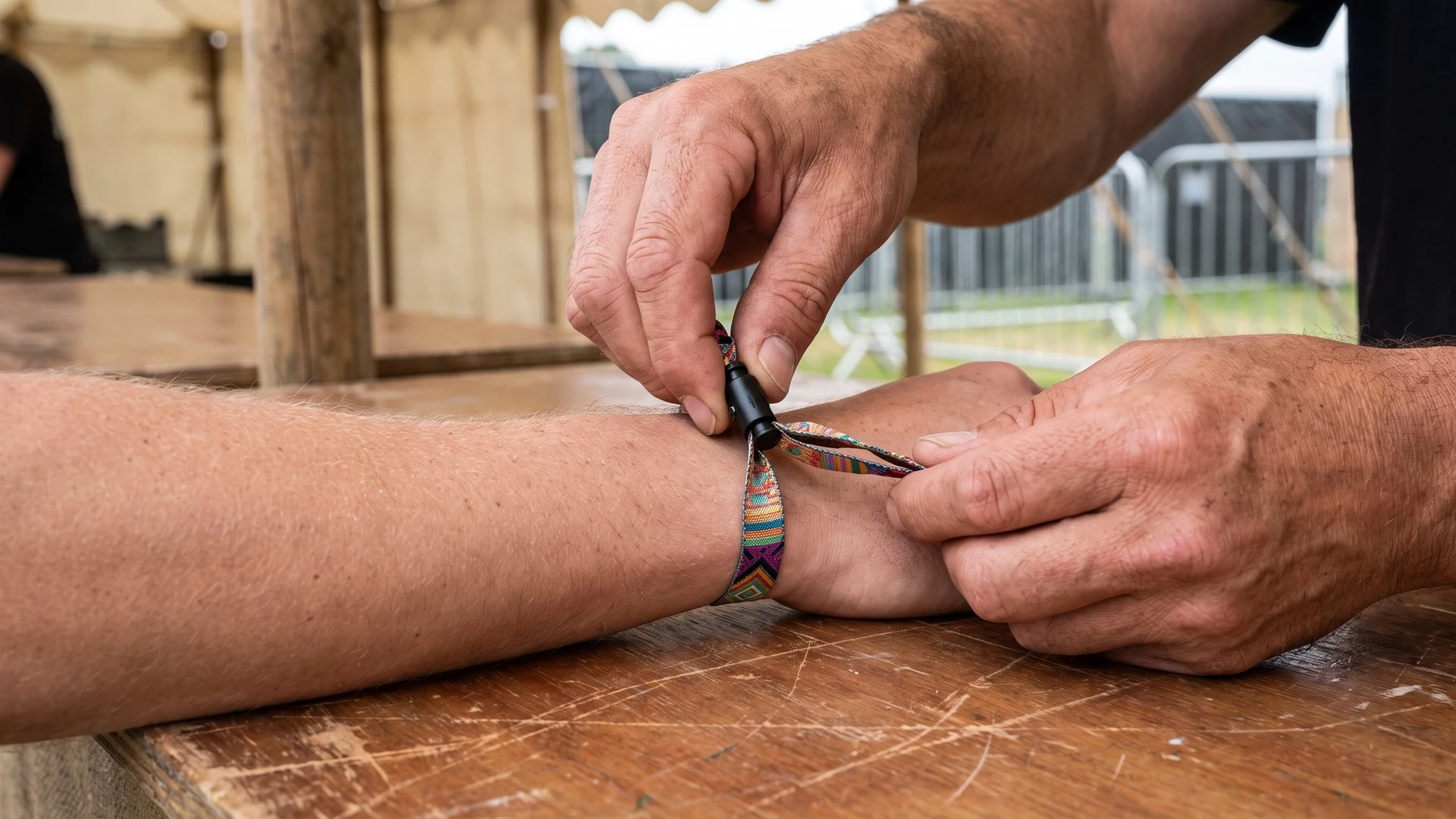
- Secure application: A trained team member physically places the event wristband on the guest rather than handing it over loose. Staff must tighten the closure properly, leaving just enough room for comfort so the band cannot slip over the hand. Proper application is essential because the wristband alone does not prevent transfer without this strict physical process.
Standardizing staff checks across different access zones
Training your access-control teams to verify a unified event wristband system saves time and reduces unauthorised entry. Staff at ticketing, campsite entrances, and restricted zones should all share a consistent checking procedure. A single cohesive system means your security personnel have fewer rules to memorise during long shifts. This clear standardisation makes crowd management smoother and gives your team confidence when denying access to invalid bands.
Establishing a process for replacement wristbands
Guests will inevitably lose or damage their bands during a multi-day event, so you must prepare for replacements. You need a standardised procedure for safely issuing new event wristbands without compromising the security of your access system. Following concrete steps allows your team to investigate discrepancies calmly while keeping the festival running smoothly.
- Confiscating damaged bands: Your staff must take possession of any stretched, torn, or tampered event wristbands before authorising a replacement. Removing the damaged item from circulation prevents someone else from finding it and attempting to bypass security later. This action keeps your site secure and provides physical evidence if you need to investigate fraudulent activity.
- Verifying original records: The support team checks the guest’s identification against the original ticketing data and the initially assigned sequential number. Staff must confirm that the person requesting a new band genuinely holds a valid ticket for the festival. Cross-referencing these details ensures you do not hand out free access to individuals exploiting the replacement process.
- Issuing and updating: Once verified, staff apply a new event wristband securely to the guest’s wrist using the standard application method. Your team then updates the central system to invalidate the old serial number and activate the new credential. This immediate digital update ensures the lost band cannot be used by anyone else at scanning points.
Reviewing your multi day wristband strategy
A unified event wristband system delivers significant operational benefits from the moment guests arrive until the site clears. Once the festival concludes, your procurement and management teams must reconcile used and unused stock to evaluate inventory accuracy. Counting the remaining sequential numbers provides vital post-event data tracking for future planning. Reviewing this information helps you continuously improve your access strategy and execute a seamless experience for your next event.
Which wristband material suits a multi day festival with camping?
For continuous wear, a fabric event wristband offers the best comfort and breathability. Woven polyester resists water and abrasion over several days. Use a one-way locking, tamper evident closure that shows removal attempts. For heavy water activity, consider vinyl or plastic with a secure snap.
How do I connect one wristband to admission, camping zones, and re entry?
Store all permissions in a central guest record linked to the wristband’s identifier. Print zone codes and dates for quick visual checks. Use Radio Frequency Identification (RFID) or Quick Response (QR) codes so staff scan once and see admission, camping, and re-entry status.
Which identifier is best for a single system?
Radio Frequency Identification (RFID) reads without line of sight for gate access. Near Field Communication (NFC) supports tap to pay at payment terminals. Quick Response (QR) codes are low cost but need camera scanning, clear sight, and network. RFID performance can drop near metal or dense crowds.
How should we handle check in, campsite verification, and late arrivals with one process?
Use one script across all points. At check in, verify ID, issue the event wristband, and activate permissions. At campsite checks, scan to confirm camping status. For late arrivals, operate an after hours desk using the same app and a simple verification flow.
What is the right process for replacements and tamper concerns?
Set a clear replacement policy. Verify the guest, cut off the old wristband, record its number, and deactivate it. Issue a new band with visible permissions. Tamper evident closures and numbered stock reduce transfer risk when staff follow the process.