Managing event re entry with the right wristband system
A secure re-entry process relies on choosing an event wristband that physically withstands the environment while preventing unauthorized transfers. When your team allows guests to exit and return, you face the operational challenge of keeping queues moving without compromising venue capacity. An effective wristband system provides staff with immediate visual confirmation of a guest’s right to enter. Planning this system carefully means you can maintain accurate headcounts and reduce the risk of people sharing access credentials outside the gates.
Selecting wristband materials for different event durations
The duration of your event dictates the physical durability your wristbands require. Matching the material to the timeline ensures that the band survives normal wear and tear without degrading or causing guest discomfort. Planning for the specific environment prevents access control issues caused by broken or unreadable bands.
Tyvek wristbands for single day admission
Tyvek is a synthetic material made from flash-spun, high-density polyethylene fibers. This interlocking network makes the material exceptionally difficult to rip by hand, which helps prevent guests from tearing the band off to share. Tyvek wristbands weigh very little and repel moisture completely, making them an ideal and cost-effective choice for short events where guests might encounter rain or sweat. The smooth surface easily accepts printed information while remaining hypoallergenic and comfortable against the skin for a full day.
Vinyl and plastic wristbands for extended wear
When an event spans several days, vinyl and plastic wristbands offer the necessary ruggedness through a specialized layered construction. These materials use flexible polyvinyl chloride, which resists stretching and fading under ultraviolet sunlight. They are fully waterproof, meaning guests can shower or swim without the band degrading or stiffening over time. The combination of a semi-rigid core and a soft taffeta lining provides sustained comfort while maintaining strict visual security for multi-day operations.
Fabric wristbands for multi day festivals
Multi-day festivals often require maximum durability combined with high comfort, which woven polyester or nylon fabric wristbands provide. A tight, high-density weave stops threads from catching on clothing, while the quick-drying synthetic fibers prevent weakening from moisture. Fabric wristbands offer excellent breathability, allowing air to flow to the skin and reducing sweat buildup during continuous wear. Cleanly finished edges stop the fabric from scratching the wrist, ensuring attendees remain comfortable throughout the entire festival weekend.
Understanding how closures affect re entry security
A tamper-evident closure is a locking mechanism designed to show obvious and irreversible damage if a person tries to remove or alter the event wristband. This physical destruction is necessary because it stops attendees from sliding an intact band off their hand to give to a non-paying guest outside the venue. For paper-like materials, this involves strong adhesive combined with die-cut slits that shred the closure tab completely when peeled. Security staff can spot this destroyed adhesive instantly at the gate, which speeds up re-entry checks without requiring ticket scanners.
Plastic, vinyl, and fabric wristbands use mechanical locks that require cutting the material to remove the band. Plastic and vinyl options feature a one-way snap that permanently anchors itself when pressed together, meaning any forceful removal breaks the plastic stud. Fabric wristbands rely on a one-way sliding lock containing internal plastic teeth that grip the woven fibers. As staff tighten the lock, the angled teeth allow forward movement but bite firmly into the threads to block any backward sliding, rendering the wristband impossible to transfer without destroying the clasp.
Using printed information and sequential numbering
Visual identifiers on an event wristband give your gate staff immediate confirmation of a returning guest’s exact permissions. Combining multiple visual elements ensures that your team can operate quickly in busy environments without relying on a single point of reference. This layered approach to identification keeps the entry process smooth and secure.
Adding text and symbols for access zones
Printing specific text and clear symbols directly onto the wristband helps staff identify restricted access zones immediately. You might print large letters indicating a specific day of the week or use bold icons to denote VIP areas and backstage passes. These clear visual cues prevent confusion at secondary checkpoints inside the venue. Staff can verify a guest’s right to enter a zone from a distance, which keeps foot traffic flowing smoothly.
Using sequential numbering to track issued stock
Sequential numbering gives each event wristband a unique number within a defined series. This feature allows your team to track exactly how much stock you issue during a shift and compare it against ticket sales. If a guest requests a replacement for a damaged wristband, staff can record the old number and issue a new one, keeping your access data accurate. Monitoring these numbers helps organizers investigate discrepancies and maintain tight control over inventory.
Combining identifiers to support color coding
Assigning a different color to each admission level is a common practice, but color coding should never stand alone as your only security measure. Low lighting, color blindness, and faded materials can make it difficult for staff to distinguish between similar shades at a busy gate. Combining a bold background color with high-contrast printed text and sequential numbers creates a robust identification system. This layered approach ensures that staff always have a secondary way to verify permissions accurately.
Training staff to check wristbands at the gate
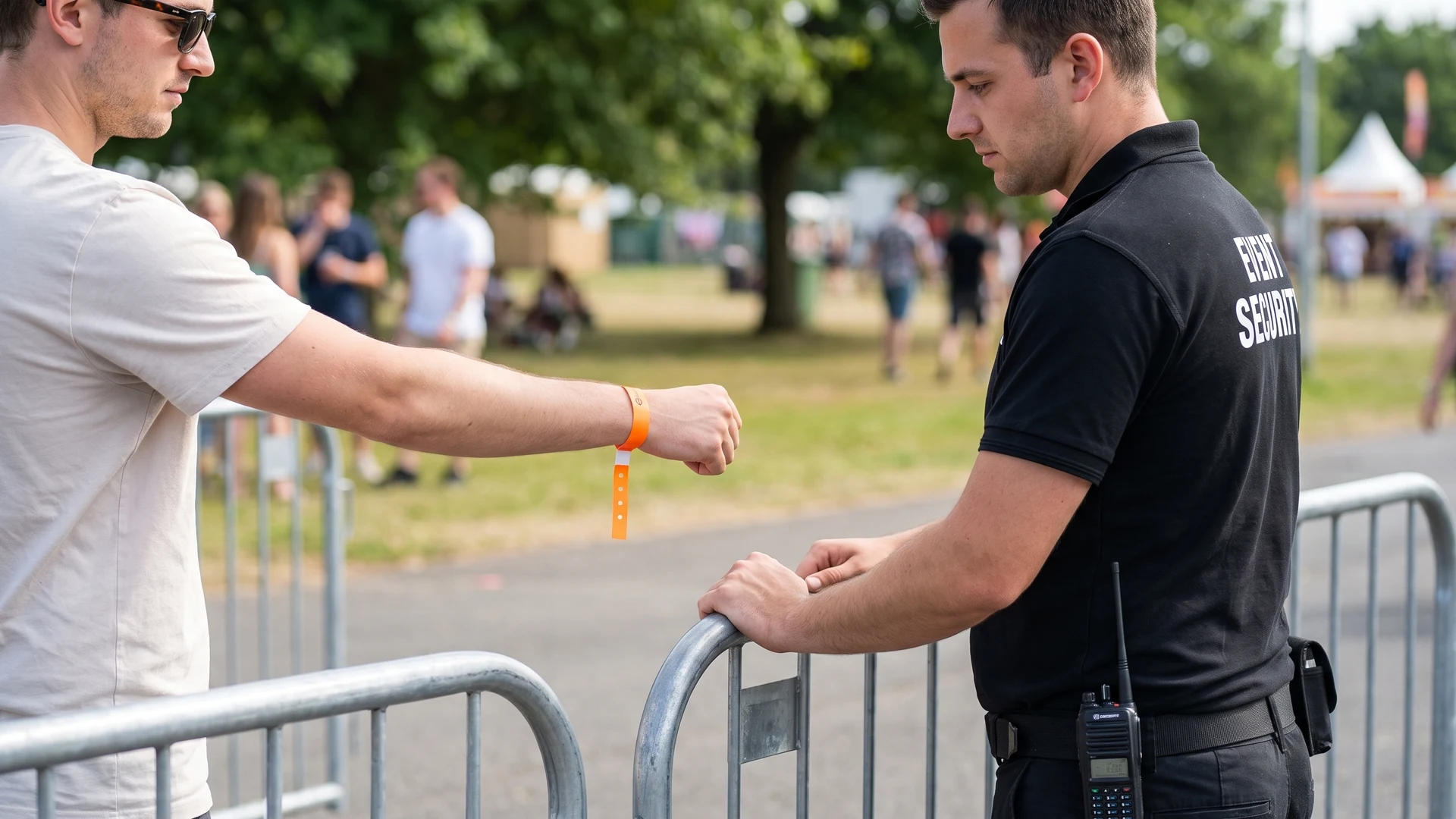
A clear gate procedure empowers your team to process returning guests consistently and securely. Training staff to follow a concrete sequence of steps reduces access mistakes and keeps queues moving efficiently. Providing this structured workflow ensures that every team member evaluates re-entry credentials to the exact same standard.
- Verify the base material: Instruct your team to touch the event wristband lightly to confirm it matches the official material issued for that day. This quick physical check helps identify unapproved substitutes printed on standard paper instead of proper synthetic fibers. Familiarizing staff with the correct texture prevents simple counterfeits from passing through busy checkpoints.
- Inspect the closure mechanism: Direct staff to look closely at the adhesive tab, plastic snap, or sliding lock for any obvious signs of tampering. They must verify that die-cut slits remain intact and that mechanical locks show no signs of stretching, gluing, or forced entry. Identifying a compromised closure immediately stops a guest from using a transferred wristband.
- Read printed permissions: Train gate personnel to read the specific text, symbols, and sequential numbering rather than just glancing at the base color. Staff should confirm that the printed information matches the current day and the specific access zone the guest is attempting to enter. This extra visual check takes only a second but drastically reduces mistaken admissions.
- Test the application fit: Have staff observe whether the wristband fits snugly around the guest’s wrist with minimal slack. If an event wristband appears loose enough to slide over the hand, staff should test the tension gently. When a band is applied too loosely, personnel must remove it and issue a properly fitted replacement following your official inventory procedure.
Reconciling wristband stock after the event
Closing the loop on your access control system requires a thorough reconciliation of all wristband inventory once the event concludes. Your team should count all unused, damaged, and confiscated stock to compare against the total number of issued bands and recorded ticket sales. This process highlights any discrepancies in your distribution procedures and helps identify areas where gate staff might need additional training for future gatherings. Accurate post-event accounting ultimately ensures that procurement teams can order the precise quantities needed for the next project, minimizing waste and controlling operational costs.
How should I choose between single use and multi day wristbands for re entry?
Start with wear time and your re entry checks. For one day, a Tyvek wristband with tamper evident adhesive that shows damage if lifted is effective. For several days, use plastic or vinyl with a snap, or fabric with a slider lock. Factor in water and comfort.
Which wristband closure is best for reliable re entry checks?
For your team, the most reliable signal is a closure that must be destroyed to remove it. Tyvek uses die cut slits over strong adhesive that shred if lifted. Plastic and vinyl snaps lock and crack if forced apart. Fabric barrel locks tighten one way and require cutting for removal.
What should we print on wristbands to speed up re entry?
Print the information your staff need to approve re entry at a glance. Include day or date, access zones, venue name, and any age or area markers. Add sequential numbering for audit control and a Quick Response code QR code if you will scan. Keep fonts large and high contrast.
How do we handle wristband replacements without opening a re entry loophole?
Use a controlled replacement process to avoid pass back. Verify the guest against a ticket or registration record, record the original number, and cut the damaged wristband. Issue a new event wristband and note the new number. Limit replacements and brief staff to watch for repeated requests.
What environmental factors can compromise re entry security over several days?
Environment can weaken closures over multiple days. Ultraviolet light can make plastic snaps brittle, heat can soften adhesives, and cold can make parts crack. Constant moisture undermines adhesive tabs, and pool chemicals or sunscreen accelerate wear. Prefer mechanical snaps for wet settings and brief staff to spot degraded closures.