Why wristband design and event processes must work together
Physical event wristbands provide a visible proof of admission, but they only function effectively when paired with robust checking procedures. A secure closure or a durable material means very little if gate staff do not know how to inspect it properly or apply it correctly. You must design your entry operations so that human workflows support the technical features of the wristband. When you align your product choices with clear staff training, you create an access system that reduces mistakes and keeps queues moving smoothly.
Choosing wristband materials and closures that resist transfer
Selecting the right material and closure combination depends entirely on your event duration and security requirements. You need to match the physical properties of the wristband to the environment so that it remains intact for the entire visit. A closure mechanism must show clear evidence of tampering or prevent removal entirely to stop guests from transferring their access rights. Evaluating how different materials behave under stress helps you choose a solution that protects your event revenue.
Tyvek adhesive closures for single day admission
Tyvek adhesive closures stop wristband transfer by using a single-use, tamper-evident design. The material consists of high-density polyethylene, known as HDPE, which features continuous fibers bonded under heat to resist tearing even when fully soaked. When gate staff press the adhesive backing together, it forms a permanent bond that relies on built-in security die-cuts. If a guest tries to peel or slide the band off, these strategic cuts cause the paper-like material to shred destructively. Because the material bonds to itself rather than the skin, a removed wristband cannot be re-glued to look new.
Plastic and vinyl snap closures for multi-day durability
Plastic and vinyl snap closures provide a secure and waterproof seal that suits multi-day festivals and venues. These wristbands feature one-way locking snaps or permanent plastic buttons that break or distort if a person forces them apart. The durable multi-layer vinyl withstands rain, sweat, and swimming over several days without tearing or degrading. This construction ensures that guests cannot pass their wristband to someone else without visibly destroying the closure.
Fabric barrel locks for secure multi-day wear
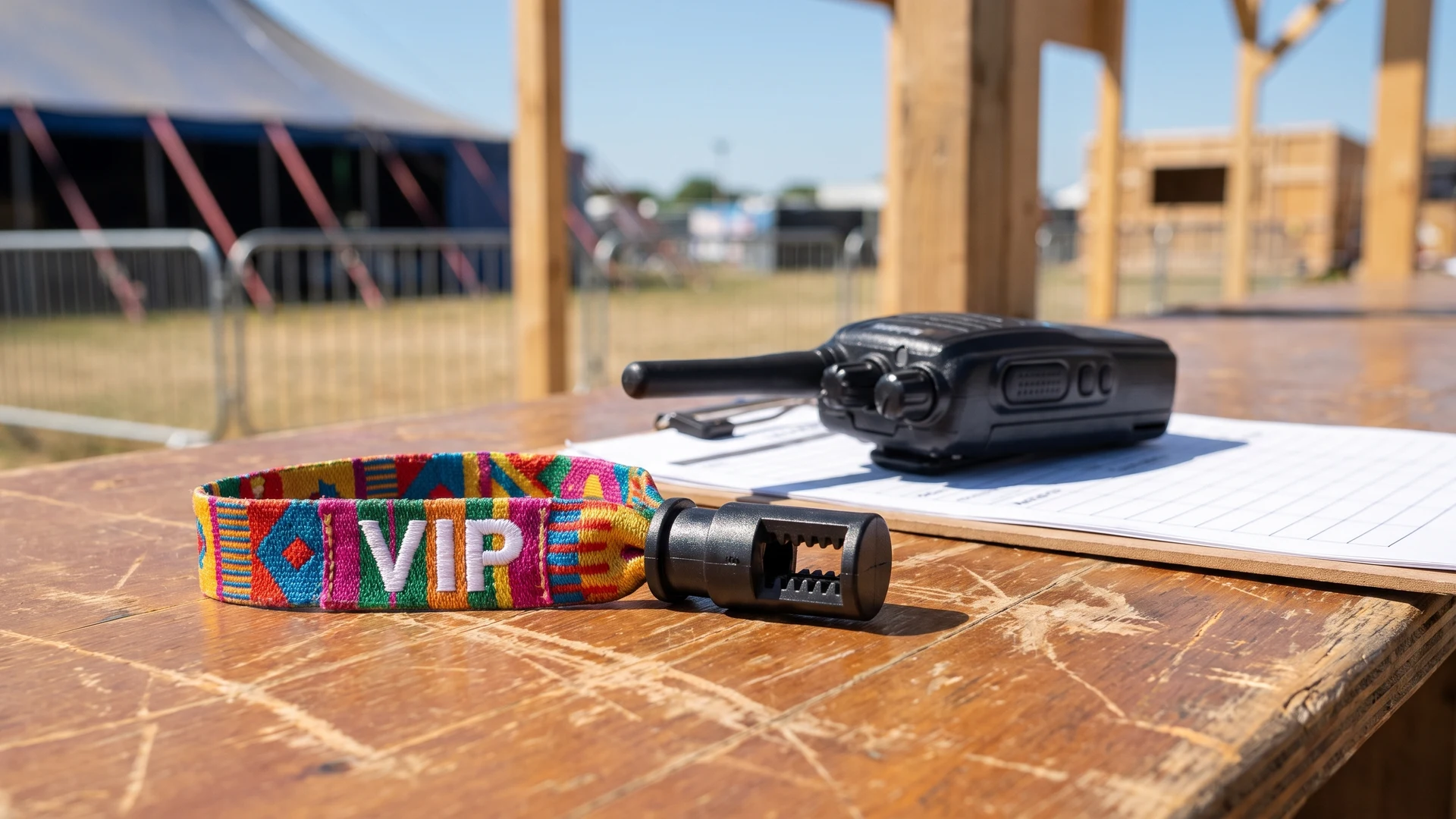
A fabric barrel lock secures a wristband permanently by using internal plastic teeth that act as a one-way ratchet mechanism. When you slide the barrel toward the wrist, the teeth angle forward to glide smoothly over the woven polyester threads. If a guest pulls the cylinder backward, the sharp interior prongs bite deep into the fibers and jam the mechanism completely. This creates high frictional resistance that stops any backward slide, meaning the fabric must be cut or the plastic crushed to remove the wristband.
Adding sequential numbering and custom print to verify authenticity
Visual identifiers beyond simple background colors make event wristbands significantly harder to duplicate and much easier to track. Relying on color alone creates vulnerabilities because shades can look similar under poor lighting or be difficult for some guests to distinguish. You can add specific printing strategies and numbering sequences to confirm authenticity quickly at the gate. These added layers of visual security help your team spot counterfeit entry attempts and manage inventory effectively.
Sequential numbering for inventory control
Sequential numbering provides each event wristband with a unique identifier within a defined numerical series. This feature allows your team to track issued stock precisely and investigate any discrepancies at the entrance gates. You can record which blocks of numbers belong to specific entry lanes or staff members to maintain strict accountability. If a guest presents a wristband with a number outside the daily allocation, your security team can easily identify it as invalid.
Custom print designs that deter unauthorized copies
Custom print designs transform a generic event wristband into a unique credential that counterfeiters struggle to replicate accurately. You can incorporate intricate background patterns, specific event logos, or custom fonts that are not readily available on standard consumer printers. When you combine these visual elements, entry staff can verify authenticity at a glance without needing special equipment. This approach deters unauthorized copies because creating a convincing fake requires too much effort and technical skill.
Using text and symbols alongside colour coding
Colour coding helps staff distinguish basic ticket categories, but you should never present it as the only method for communicating critical access information. Important permissions must also appear as clear text or distinct symbols to ensure accuracy and accessibility. You can print bold text indicating specific access zones or use large symbols for age verification to support your front-line team. This combination speeds up visual checks and gives staff a consistent process to follow even in challenging event environments.
Essential steps for applying an event wristband securely
Securing an event wristband properly prevents guests from slipping it off over their hand and passing it to someone else. Your team must follow a practical, actionable sequence during the application process to eliminate the most common physical causes of unauthorized transfer. Training staff to handle this step correctly ensures that the tamper-evident features of the closure actually work as intended. You can implement these concrete steps immediately to strengthen your overall access control workflow.
- Prepare the guest: Ask the guest to present their wrist and ensure the skin is dry so adhesive materials can bond properly. This initial step speeds up the flow at the gate and ensures a clean application surface. You also establish immediate control over the physical application process rather than letting guests put it on themselves.
- Position the band: Wrap the event wristband closely around the wrist while leaving just enough space for one index finger to fit underneath. This tight but comfortable fit stops the guest from sliding the band over their knuckles later in the day. Proper positioning is the single most important factor in preventing unauthorized pass-backs.
- Engage the closure: Press the adhesive firmly together or snap the plastic lock completely shut depending on your specific wristband type. You must apply enough pressure to activate the tamper-evident die-cuts or lock the one-way plastic teeth securely in place. Taking a moment to secure the closure correctly guarantees the structural integrity of the seal.
- Test the fit: Give the secured wristband a gentle tug to confirm that the closure holds firm and the size cannot expand. A quick physical check ensures that no one can manipulate the band once they walk away from the entry gate. This simple verification step catches loose applications before they become security risks.
Training event staff to inspect wristbands efficiently
Teaching your entry staff exactly what features to look for during an inspection reduces access mistakes and keeps queues moving fast. Your team needs simple, consistent checking procedures so they can evaluate an event wristband in a matter of seconds. Instead of just glancing at a colour, staff should actively check the closure mechanism for signs of stretching, tearing, or tampering. When you communicate these specific features clearly, front-line workers gain the confidence to challenge suspicious wristbands.
You should also train your staff to verify any custom print designs, text, or sequential numbering that validates the credential. Providing a physical reference board at each gate helps workers compare the wristbands they see against an authentic master sample. This practical operational detail ensures that everyone applies the same security standards across all entrances and restricted zones. A well-trained team acts as the crucial human element that makes your physical access control system successful.
Establishing clear replacement rules for damaged wristbands
Handling broken, tight, or removed wristbands properly requires a strict framework that prevents loopholes for unauthorized guests. You must require guests to return the original damaged event wristband before your team issues a new one. This ensures that one paid ticket only ever equals one active credential inside your venue. By recording every replacement alongside the sequential numbering system, you maintain total control over your inventory and give your team a secure method for resolving guest issues.
Which event wristband features actually deter pass-backs?
Choose one-way closures and tamper-evident designs. Tyvek adhesive tabs with security die-cuts shred if lifted. Plastic or vinyl snaps distort when forced off. Fabric barrel locks use teeth that ratchet tight and jam in reverse. Sequential numbering and clear printing help link each wristband to its rightful holder.
How should entrance staff spot and handle tampered wristbands?
Start with a quick visual and tactile check. Look for lifted adhesive, torn die-cuts, stretched holes, cracked snaps, or frayed fabric near a barrel lock. Compare the serial number and printed details with your issue record. If tampering is suspected, escalate to a supervisor and redirect the guest.
What replacement policy reduces swapping without frustrating guests?
Write a replacement process that confirms identity and cancels the old event wristband. Require the original band to be presented and cut off in view. Verify a booking, photo identification, or purchase record and log both serial numbers. Limit one replacement per person unless a manager approves.
How tight should you apply an event wristband to stop easy removal?
Apply it snug so one finger fits between the band and skin. Place it just above the wrist bone for stability. For Tyvek, press the adhesive area flat with firm pressure. For snaps or barrel locks, fully engage the closure, then trim any excess tail to remove slack.
Which closures suit single-day and multi-day events if transfer is a risk?
For single-day use, Tyvek event wristbands with tamper-evident adhesive and die-cuts are effective and efficient. For multi-day wear, choose plastic or vinyl wristbands with one-way snaps, or fabric wristbands with barrel locks. These closures resist transfer and the materials stay durable and comfortable in wet conditions.